

Testosterone Therapy for Women: Understanding Low Libido, HSDD, and Safe Testosterone Use
Many women are surprised to learn that testosterone is not just a male hormone. Women naturally make testosterone too, in smaller amounts, from the ovaries and adrenal glands. It can play a role in sexual desire, arousal, responsiveness, and orgasmic function.
For some women, especially after menopause or after surgical removal of the ovaries, lower testosterone may contribute to distressing low sexual desire. But low libido can also come from many other causes, including sleep disruption, stress, relationship strain, depression, medication side effects, vaginal dryness, pain with sex, or other health conditions.
That is why testosterone therapy should be thoughtful, individualized, and carefully monitored. It can be helpful for the right patient, but it is not a one-size-fits-all menopause treatment.
Quick Takeaways
- The best-supported use of testosterone therapy for women is distressing low sexual desire, often called HSDD, after other causes have been considered.
- There is no FDA-approved testosterone product specifically designed for women in the United States.
- Benefits are usually moderate, not dramatic, and safe use depends on correct dosing and monitoring.
What Is HSDD?
Hypoactive Sexual Desire Disorder, often shortened to HSDD, is a recognized medical condition involving a persistent lack of sexual desire that causes personal distress or relationship difficulty.
HSDD is not diagnosed from a testosterone blood level alone. A careful evaluation looks at symptoms, medications, mood, sleep, relationship context, pain, vaginal dryness, medical history, and other health concerns.
A diagnosis of HSDD is made only when symptoms are not primarily caused by:
- Relationship problems
- Medication side effects
- Depression, anxiety, or another mental health condition
- Another underlying medical condition
in sexual activity
thoughts or fantasies
sexually aroused
sexual experiences
to intimacy changes

Why Is Testosterone Prescribed for Women?
Testosterone is naturally present in women throughout life. It is involved in sexual desire, arousal, responsiveness, and orgasmic function.
After menopause, and especially after surgical menopause, testosterone levels may decline. For some women, testosterone therapy can help improve distressing low sexual desire when the symptoms fit HSDD and other causes have been addressed.
There is currently no testosterone product specifically approved for women in the United States. Clinicians often use a very small fraction of a male-approved transdermal product, such as testosterone gel.
What Benefits Can Women Expect?
Clinical studies suggest that low-dose transdermal testosterone can provide a moderate improvement in sexual function for some postmenopausal women with HSDD.
Benefits are typically gradual and may take several weeks to several months to become noticeable.
Is Testosterone Therapy Safe?
When prescribed at physiologic doses and appropriately monitored, testosterone therapy is generally well tolerated. Monitoring matters because side effects become more likely when testosterone levels are too high.
Common Side Effects
- Mild acne
- Oily skin
- Mild increase in facial or body hair
- Mild weight change related to fluid retention
- Skin irritation at the application site
Contact Your Clinician If You Notice
- Voice deepening or persistent hoarseness
- Scalp hair thinning or clitoral enlargement
- Severe acne or significant increase in facial/body hair
- Significant mood changes, swelling, chest pain, or shortness of breath
Some androgen-related changes may be irreversible if testosterone levels become too high.
How to Use Testosterone Gel Safely
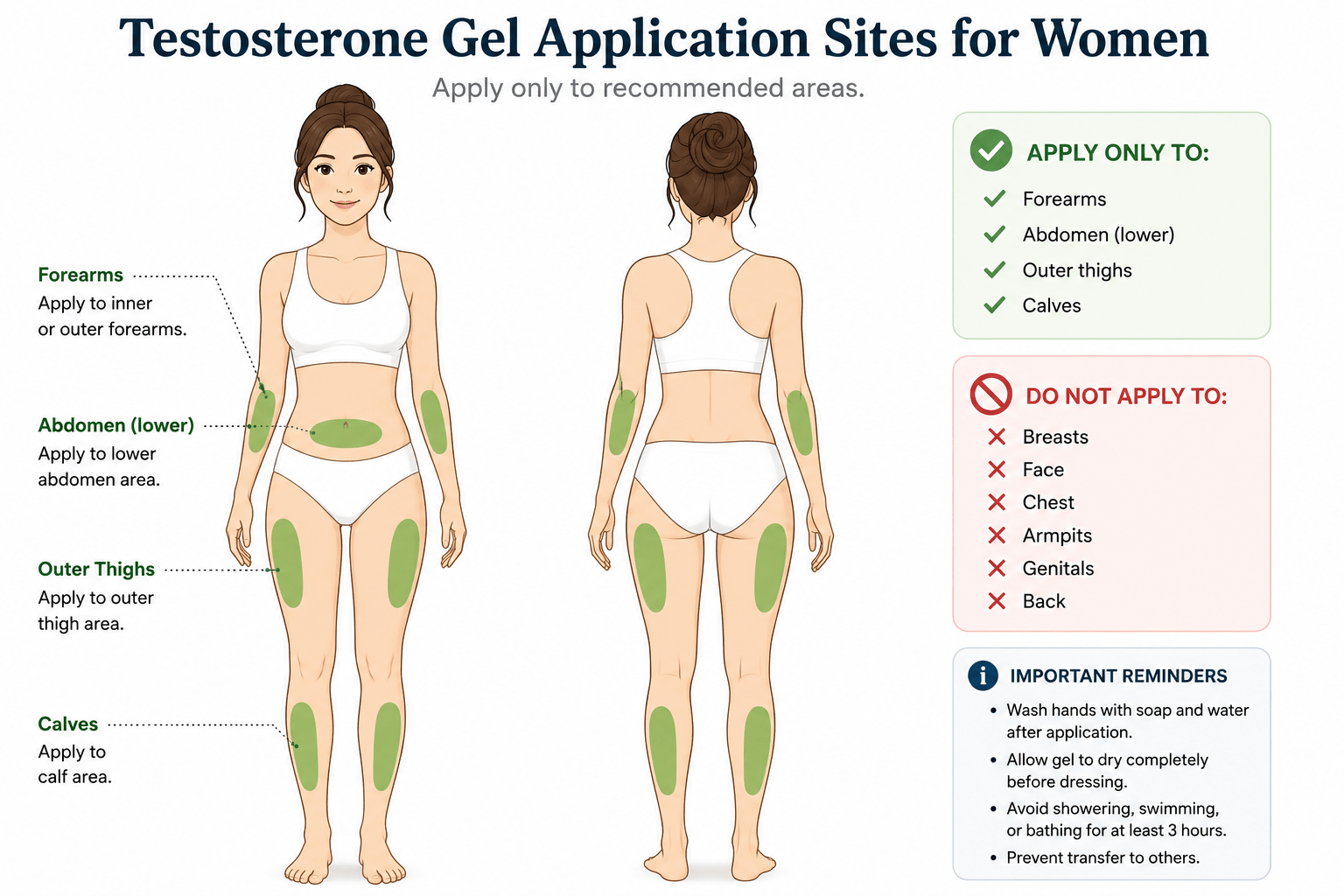
When testosterone gel is prescribed, patients receive individualized instructions. The exact dose and application plan should come from the prescribing clinician.
- Use only the amount prescribed.
- Apply to clean, dry, intact skin in approved areas.
- Let the gel dry completely before getting dressed.
- Wash hands thoroughly with soap and water after application.
- Keep the application site covered after the gel dries.
- Do not shower, swim, or bathe until the recommended waiting period has passed.
- Do not share testosterone with anyone.
Blood Tests and Monitoring
Before starting, a baseline testosterone level is used for safety and future comparison. A low testosterone level by itself does not diagnose HSDD.
- Repeat testosterone level about 3 to 6 weeks after starting or changing dose
- Follow-up visits to review benefit, side effects, and correct use
- Ongoing blood testing and clinical assessment about every 6 months
Who Should Not Use Testosterone?
- People who are pregnant, may become pregnant, or are breastfeeding
- People with hormone-sensitive cancer
- People with undiagnosed vaginal bleeding
- People with severe liver disease or elevated androgens
Frequently Asked Questions
Is testosterone therapy FDA-approved for women?
There is currently no FDA-approved testosterone product specifically designed for women in the United States. When used for women, testosterone is typically prescribed off-label and must be carefully dosed and monitored.
Does a low testosterone blood test mean I need testosterone?
No. A testosterone level alone does not diagnose HSDD and does not determine whether testosterone therapy is appropriate.
How long does testosterone therapy take to work?
Some women notice improvement over several weeks, but it can take a few months to know whether treatment is helping. If there is no meaningful benefit by about 6 months, treatment is usually stopped.
Can testosterone help with energy, mood, brain fog, or weight loss?
Some women report changes in these areas, but current evidence does not support prescribing testosterone routinely for energy, mood, cognition, weight loss, muscle building, or anti-aging.
Can testosterone gel transfer to other people?
Yes. Testosterone gel can transfer through skin-to-skin contact. Wash hands after applying, cover the application area once dry, and avoid exposing children, pregnant people, and pets.
This article is educational and does not determine whether testosterone therapy is appropriate for an individual patient. Testosterone therapy for women is off-label in the United States and should be individualized and monitored.