
Understanding Your Lab Results: What the Numbers Can and Cannot Tell You
You open your lab report and see a result marked “high,” “low,” or “abnormal.” Does it mean something is wrong? Do you need treatment? Can it wait until your next appointment?
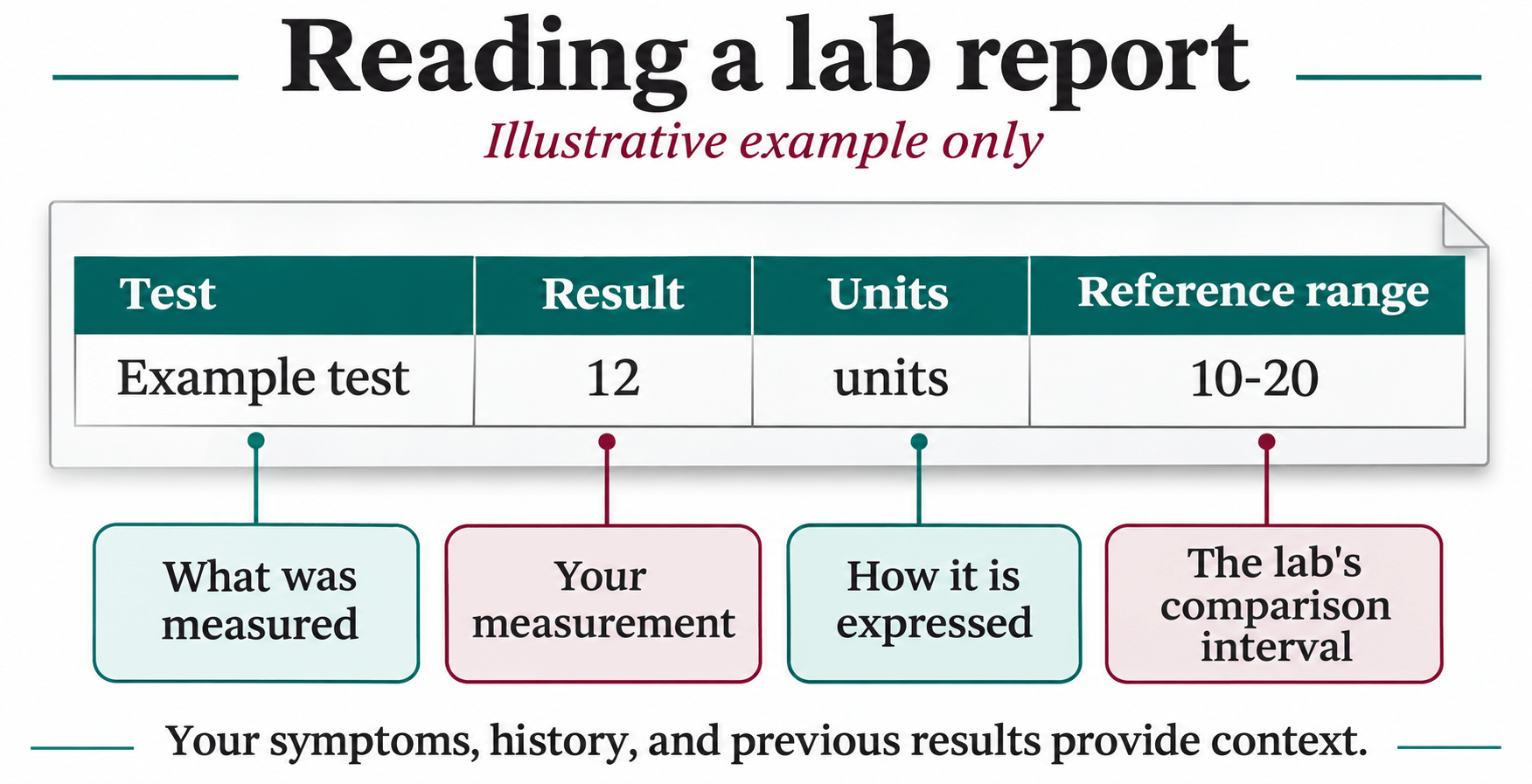
Lab results provide valuable information, but interpreting them takes more than reading the highlighted numbers. Your symptoms, medical history, medications, and previous results help determine what a finding means for you.
What Does the Reference Range Mean?
A reference range describes results typically found in a selected group of healthy people. It provides context, but it is not a firm boundary between health and disease.
A slightly out-of-range result may not indicate a medical problem. Conversely, results within range do not rule out every condition, particularly when symptoms persist.
Use the range and units printed on your own report. Laboratories may use different methods, so a number found online may not be directly comparable.
Common Tests and What They Help Explain
These are examples of frequently ordered tests, not a checklist of tests everyone needs.
| Test | What It Helps Assess | Important Context |
|---|---|---|
| Complete blood count (CBC) | Red blood cells, white blood cells, hemoglobin, and platelets | Can identify anemia and other blood-cell changes. An abnormal result usually needs context to determine its cause. |
| Comprehensive metabolic panel (CMP) | Blood sugar, electrolytes, and several markers related to kidney and liver health | Results are interpreted together; one flagged measurement does not establish a diagnosis. |
| Hemoglobin A1c | Average blood sugar over approximately three months | Used in diabetes screening and monitoring. Certain blood conditions can affect accuracy. |
| Lipid panel | Cholesterol and triglycerides | Treatment decisions consider overall cardiovascular risk, not total cholesterol alone. |
| Thyroid-stimulating hormone (TSH) | Helps assess thyroid function | Other thyroid tests may be needed to clarify an abnormal result. |
| Prostate-specific antigen (PSA), for men | Measures a protein produced by the prostate; used to help screen for and monitor prostate cancer | An elevated PSA does not necessarily mean cancer. Prostate enlargement or inflammation can also raise it. Screening and follow-up depend on age, risk factors, previous results, and discussion with your medical provider. |
| Vitamin D (25-hydroxyvitamin D) | Assesses vitamin D status, which supports calcium absorption and bone health | Results can help guide supplementation when appropriate. Interpretation considers bone health, medical conditions, and current supplements. More vitamin D is not always better; excessive supplementation can be harmful. |
A Reference Range Is Not Always Your Treatment Goal
Some results are interpreted using diagnostic thresholds or individualized treatment targets rather than the laboratory’s reference range alone.
For example, the cholesterol level appropriate for someone with established cardiovascular disease may differ from the goal for someone at lower risk. Similarly, an A1c used to help diagnose diabetes answers a different question from the A1c goal chosen for a person already receiving treatment.
Your medical provider can explain which targets apply to you and why.
Why Previous Results Matter
Bring earlier reports when possible. Your medical provider can assess whether a finding is new, stable, or changing and whether differences in testing methods or units affect the comparison.
Using the same laboratory can make trends easier to interpret. If your tests were performed at different laboratories, bring the complete reports so your provider can review the methods, units, and reference ranges.
What Can Affect a Result?
Preparation and circumstances matter. Food, strenuous exercise, medicines, supplements, and whether you followed fasting instructions can affect certain tests. Dehydration can also influence some blood-count measurements.
Follow the instructions for your specific tests. Do not fast unless instructed, and do not stop prescribed medication on your own. Tell your care team about supplements and any preparation instructions you could not follow.
When Should I Follow Up?
Before testing, ask how and when results will be reviewed. If that timeframe passes without an explanation, contact the medical provider who ordered the tests.
A useful review should leave you knowing whether you need treatment, repeat testing, further evaluation, or no immediate change.
If your care team or laboratory tells you a result is critical or requires urgent action, follow those instructions promptly. Do not assume that feeling well means an urgent result can wait.
Severe chest pain, difficulty breathing, or sudden confusion warrants emergency care regardless of what a recent lab report says. Call 911 rather than waiting for a routine results appointment.
Questions to Bring to Your Results Review
- Which findings matter most for my health?
- Could these results help explain my symptoms?
- How do they compare with my previous results?
- Do I need treatment or additional testing?
- When should testing be repeated, and how should I prepare?
- Who will follow up, and when should I expect to hear from them?
Bring the complete report, including units and reference ranges, along with your medication list and previous results when available.
Understanding Your Results in Santa Fe
The medical providers at Santa Fe Mobile MD can help you understand your lab results in the context of your symptoms, medical history, and ongoing care. Our visits average an hour, giving us time to listen, review results carefully, connect them with your concerns, and answer your questions without rushing. That time allows us to look beyond individual numbers and give important details the attention they deserve.
As one patient recently said,
“Doctor, you take the mystery out of medicine.”
That is our goal: to help you understand what your results mean, what needs attention, and what comes next.
Schedule a visit with one of our medical providers to discuss your results and questions.
Schedule a results-review visit